Pages

domingo, 4 de março de 2012

Stern Men - Elizabeth Gilbert

Elizabeth Gilbert is great. No, she is fantastic, amazing and totally awesome. All her books are totally involving and are of the kind that catch your attention and keep it there until you are done reading the book. Every single book of hers is somehow better than the other. She is one writer that you can tell truly enjoys writing and does so from the depth of her soul. There is so much context, so much honesty and deepness in every single one of her books that you are compelled to continue reading them. 
This book is a simply written book (like most all of her books are) of two small fishing islands. The main character is a young, spirited and feisty young woman named Ruth. The whole story has a very nice and easy going narrative, plausible occurrences and everyday dialogues. But what makes the book good is the ending. It is totally unexpected, out of the blue and you realize you would never have thought that the book could end the way it does. The whole novel is very original, full of wit and spark and always true to the authors nature, plenty of humor as well. 


Book Review:


“Honestly, was there any reason a smart fisherman had to wake up at four A.M.? There had to be a better way.” —Stern Men
Off the coast of Maine lie the remote islands of Fort Niles and Courne Haven. The two are virtually identical, have no near neighbors, and are separated only by a shallow channel less than a mile wide. Yet, for generations, their residents have been divided by a bitter and occasionally bloody feud begun by a long-forgotten man of questionable sanity. So by 1976, the only thing that the hard-drinking, stubborn, and proud lobster fishermen of Fort Niles know for certain is that they hate the hard-drinking, stubborn, and proud lobster fishermen of Courne Haven . . . and vice versa. What neither group realizes, however, is that outside forces are conspiring to change their way of life forever, and their hope for salvation just might lie in the hands of a very unusual young woman.
Ruth Thomas was born on Fort Niles in 1958 during “a week of legendary, terrible storms” (p. 12) and their fury established the tenor of her early years. Her parents—Stan, a native Fort Niles lobsterman, and Mary, the illegitimate, quasi-granddaughter of the island’s wealthy mainland patrons—separated when their daughter was just nine, and Ruth has been struggling against her mother’s attempts to win her away from Fort Niles ever since.
Up until she turned eighteen, Ruth was coerced into attending an elite boarding school in Delaware with girls “who fussed over their figures annoyingly, uninterruptedly, odiously” (p. 46). And, upon graduation, she proclaims her decision to eschew college in favor of joining her father, Stan, on his lobster boat as a stern man. No one is pleased by this announcement—not even Ruth who, honestly, finds both lobster fishing and her father’s company profoundly boring. Fortunately, her father has already engaged a stern man for the season, and Ruth is left to fume insincerely over her disappointment.
Though quick with a lie when it suits her, Ruth is honest with herself and knows two things for certain: she loathes the Ellises and she very much likes the solid, silent figure and blond eyelashes of one Owney Wishnell—a descendent of Courne Haven’s finest lobster-fishing family and therefore one of her father’s most hated rivals. Equipped with this knowledge, Ruth sets out in search of her destiny.
To the naked eye and especially to Cal Cooley—the Ellis family’s eyes and ears and Ruth’s nemesis—it might seem as if she were simply idling the summer away. Even Ruth herself is unsure what course her meanderings will take, but there is one person on the island who is confident they are the prelude to greatness. And, in the end, an elephant’s tusk, an antique lighthouse lens, and a drunken foray on Courne Haven point the way toward happiness and the salvation of the world Ruth loves.
In her sparklingly original debut novel, Elizabeth Gilbert’s indomitable heroine takes on a world hitherto run by men and achieves a triumph that trumps even her most ardent naysayers. Told with wit and compassion, and peopled by an endearingly quirky cast of characters, Stern Men also offers a tantalizing early glimpse of the writer whose own story would go on to strike a chord with millions of readers.

sábado, 3 de março de 2012

As Esganadas - Jô Soares

Truth be said, I expected more of this book. I had all my students, friends and known people (some which I am sure never even got to read the book) rant and rave about how good, exceptional and well written this book as was. Okay, I wouldn't classify it as bad or unreadable but I also definately wouldnt rate it as a magnificent peice of Brazilian literature to be read by any and by all (like so many others have classified it to be). Giving credit where credit is due, the idea was great. That yes, was something out of the ordinary and which I am sure is what made the book get as much credibility and become so well known and widespread. But in my opinion there lacked the polishing of many details and facts in the book and that is what was missing to make the book outshine and become a truly great success (at least before my eyes). Though other than that it is an easy read, a simple vocabulary, light and quick so that it doesn't take anyone too long to get it done.

Book Review (sorry, it is in Portuguese):

É difícil alguém rir alto quando lê um livro, quando isso acontece, o livro se materializa, o seu “existir espiritual” ganha uma proporção física, rara, de inquietação por parte dos seus leitores. É um resultado positivo e que merece uma levantada no chapéu, uma vez que nossa percepção anda lesionada pela sobrecarga e velocidade das informações que estamos recebendo.
Ler um livro já caracteriza uma atitude tremenda contra esse ritmo do mundo, rir com um livro então, é algo para um quase Buda: alguém aquém da miséria espiritual que caracteriza essa tal geração Y. Mérito esse, facilmente alcançado pelos leitores do novo romance do Jô Soares, As Esganadas. Percebi isso ao me pegar controlando os ânimos para não acordar minha mãe que dormia no sofá à minha frente, algo que nunca ocorreu nas minhas leituras, desde os gibis até o que li de James Joyce.
José Eugênio (Jô) Soares, já escreveu O Xangô de Baker Street, O Homem que Assassinou Getúlio Vargas e Assassinatos na Academia Brasileira de Letras, todos lançados pela Companhia das Letras. É um autor que dispensa maiores apresentações, e me permite dizer que seu mais novo livro, também lançado pela Companhia, se passa no ano do seu nascimento, 1938, e recria por uma espécie de memória atávica o Rio de Janeiro dessa época, por onde sua mãe perambulava quando grávida.
As Esganadas tem seu núcleo nas investigações a respeito do sumiço corrente de mulheres na Gávea, Porém, uma característica é comum a todas elas: são gordas, petulantemente gordas e viçosas, muito bem constituídas, uma a uma. Afinal, de acordo com Luis Fernando Veríssimo, “Como ator e comediante, o Jô é um grande fazedor de tipos. Sabe como poucos construir um personagem, defini-lo com um detalhe e dar-lhe a vida com graça e inteligência”.
Logo no pontapé inicial do livro, nos é revelado quem é o assassino e quais são as suas motivações, fazendo com que fiquemos íntimos das suas convicções. Os desejos e opções do psicopata se tornam comuns aos leitores, visto que é ao lado dele que caminhamos na trama. Escrita em terceira pessoa, com uma onisciência implacável e um poder de argumentação que faz o leitor se deliciar com rocamboles, cremes de avelã e todos os tipos de doces que o protagonista usa para atrair as mulheres, e em seguida, se divertir com os requintes de crueldade que suas vítimas são abatidas.


A ficção é a estória possível, mas não acontecida. A verossimilhança dos fatos dá suporte à obra. O romance reconstrói o Rio de Janeiro do estado novo, com cenas registradas historicamente, como a transmissão pelo rádio da derrota para a Itália, da seleção brasileira liderada por Leônidas, na Copa do Mundo daquele ano. Além de uma corrida automobilística no Circuito da Gávea.
As Esganadas trás à tona um contexto que antecipa a Segunda Guerra Mundial, com elementos criados por uma imaginação perspicaz, que justifica o suicídio forjado por Aleister Crowley, e coloca esse falso mago em contato direto com Fernando Pessoa, devido aos seus interesses comuns ao misticismo e ao horóscopo. Como se não bastasse, Jô Soares dá vida a Esteves sem metafísica, personagem que surge no poema Tabacaria, de Haroldo de Campos, e coloca os três num navio em Lisboa, para uma viagem de quinze dias até o Rio, onde saltitam as gulosas presas de um maníaco que odeia Getúlio Vargas.
As Esganadas diverte, prende a atenção, trás cópias de páginas de jornais cariocas de época, ilustrações feitas a mão pelo próprio autor, nos faz querer experimentar as guloseimas oferecidas como iscas a vítimas volumosas, contextualiza o Brasil de setenta e quatro anos atrás, com o país atual, intertextualiza escritores e seus personagens. Nesse ultimo livro do Jô, há magia, há crime e encanto, é uma obra que faz odiar, ficar com fome e rir, como tem de ser as boas experiências da vida.

sexta-feira, 2 de março de 2012

One Day - David Nicholls

I am a fan of love stories and "happy ever after" romances - but truth spoken, when I reach the end of reading one of these novels they usually leave me with the feeling that something has been missing, like the end just wasnt right. Yet it wasnt so with this novel and the reason for this is because it is a very real story -a story that you catch yourself thinking while you are in the middle of a page "this could definitely be me" or "I could see this happening to me". 
As always, David Nicholls knows how to create the most amazing characters ever. He somehow makes it possible for you to create a relationship with the two leading characters of the book that it seems that you are having a twenty year threesome with both Emma Morley and Dexter Mayhew. They are both very honest and true to life and I guess that is the secret in which makes this an 100% great book to read. 


Wikipedia on "One Day":


One Day is a novel by David Nicholls, published in 2009. Each chapter covers the lives of two protagonists on 15 July, St. Swithin's Day, for twenty years. The novel attracted generally positive reviews, and was named 2010 Galaxy Book of the Year.[1] Nicholls has adapted his book into a screenplay; the feature film of the same name was released in August 2011.

Plot

Dexter and Emma spend the night together following their graduation from Edinburgh University in 1988. They talk about how they will be once they are 40. While they do not become romantically involved completely, this is the beginning of their friendship. The novel visits their lives and their relationship on July 15 in successive years in each chapter for 20 years. Emma wants to improve the world and begins writing and performing plays, which remain unsuccessful, while Dexter travels through the world, drinking and hooking up with women. Eventually both move to London where Emma becomes a waitress in Kentish Town at a Tex-Mex restaurant, while Dexter becomes a successful television presenter.
While there are various attempts from both sides to start a relationship, coincidences stop Emma and Dexter from getting together and while they have relationships with other people, they stay best friends, both secretly longing for the other. They are drawn together closer through a holiday together and the death of Dexter's mother.
Ian, Emma's boyfriend breaks up with her after he realizes that she is in love with Dexter and not with him. During this time Emma is able to find a job as a teacher, after various years of struggle, despite a "double-first degree". Dexter meanwhile develops a drinking and drug problem and watches his career collapse. The friendship between Emma and Dexter grows more and more difficult, after Emma is constantly hurt by Dexter who attempts to hide his feelings for her from both her and himself. After being treated rudely by Dexter at a restaurant, Emma breaks up the friendship.
At the wedding of Emma's former roommate, Emma and Dexter meet again. Emma admits that she wants Dexter back. At this point of time she has just ended an affair with her headmaster, Dexter has fallen in love with another woman, Sylvie, who is pregnant. At this reunion, he invites Emma to his wedding, who is disappointed by the situation.
Emma eventually overcomes her problems and publishes a book, while Dexter is unemployed and overwhelmed by his role as a father. After realizing this, he and Emma for the first time have sex. They do not get together and Emma leaves to go to Paris to write her second novel. When Dexter visits her in Paris, he learns that she met someone and likes him and for the first time admits his feelings to her. After talking about their relationship, Emma chooses Dexter.
Emma and Dexter get married and are happy together, however Emma wants a child. The couple finds themselves frustrated by the failing attempts to have a child. Dexter however is able to open a deli-cafe and finds himself suddenly successful again. On the anniversary of the day they met after graduation and the day they got together, Emma and Dexter have an appointment to see a house. While travelling there, Emma has a bike accident and dies. After her death, Dexter finds himself in despair. He starts to drink again and provokes people in bars in order to get beaten. He is comforted through his ex-wife Sylvie, his father and his daughter. The upcoming year he travels together with his daughter to Edinburgh where he and Emma met and they climb the same mountain together that Emma and Dexter climbed 19 years ago.
The book ends with a memory of what happened after that first night together in 1988 and Emma's and Dexter's first kiss and promise to stay in touch and their goodbye.

[edit]Major themes

Writing in The Times, John O'Connell writes, "For, in spite of its comic gloss, One Day is really about loneliness and the casual savagery of fate; the tragic gap between youthful aspiration and the compromises that we end up tolerating. Not for nothing has Nicholls said that it was inspired by Thomas Hardy."[2] A critic in thelondonpaper observes that One Day"may be a love story, but it’s no fairytale: Nicholls doesn’t shy from the dark side of growing up, the disillusionment, regrets and random cruelty of life.".[3] According to Jonathan Coe (Guardian Books of the Year 2009), "It's rare to find a novel which ranges over the recent past with such authority, and even rarer to find one in which the two leading characters are drawn with such solidity, such painful fidelity, to real life."

[edit]Reception

The novel attracted mainly positive reviews. Writing in The Guardian, Harry Ritchie called it "a very persuasive and endearing account of a close friendship - the delight Emma and Dexter take in one another, the flirting and the banter that sometimes hide resentment and sometimes yearning, the way the relationship shifts and evolves as the years pass."[4] Ritchie comments, "Just as Nicholls has made full use of his central concept, so he has drawn on all his comic and literary gifts to produce a novel that is not only roaringly funny but also memorable, moving and, in its own unassuming, unpretentious way, rather profound."[4] This story is reminiscent of Same Time Next Year.
Elizabeth Day of The Observer also praises the novel, although criticising "its structural flaws", since "some of the most important events in their life are never recounted." Despite this, she concludes by commenting "there is no doubt that One Day is a beguiling read. But although I really liked it, I wanted desperately to love it because Nicholls is, I think, a far better writer than this format allows him to be."[5]
The Times deflected comparisons to When Harry Met Sally..., "saccharine" assumptions, and expectations that the "more literary" will snobbishly gratify themselves that they never read "'commercial' romantic comedies with cartoons and squiggly writing on the cover. Well, be convinced: One Day is a wonderful, wonderful book: wise, funny, perceptive, compassionate and often unbearably sad. It's also, with its subtly political focus on changing habits and mores, the best British social novel since Jonathan Coe's What a Carve Up."[2]
Author Nick Hornby also praised the book on his blog, calling it "A big, absorbing, smart, fantastically readable on-off love story." His blurb is used in some editions of the book, such as the U.S. paperback edition.[6]
In 2010, the novel was named Popular Fiction Book of the Year at the UK's annual Galaxy National Book Awards ceremony, and was later granted the accolade of Galaxy Book of the Year.[1]

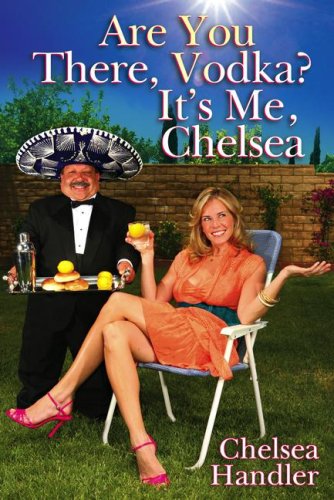
"Are You There, Vodka? It's Me, Chelsea"


If you ever want to laugh until you feel urine running down your legs, tears rolling down your face, and your tummy muscles contracting harder than when you have ever been to the gym - well, then you have just GOT to read this book. It is a gathering of short stories in different stages of the author's life from since she is a young child, a maturing young adolescent and finally a young - and crazy - woman! You start the book by reading her first story “Blacklisted” where she becomes the newest popular girl in school by inventing a whole set of lies each day to back up the very first one she told. From there on the book just gets better and better – her accounts on driving and getting pulled over and then stuck in jail is just too hilarious to be true, the story of her Persian boyfriend letting a dog lick his private parts on a daily basis is gross but the way she recounts it makes it impossible for you to stop laughing. If that wasn’t enough she still goes on to the story of having sex with a red headed guy and his red pubic hairs – ugggg!!!
Chelsea makes you laugh just by recounting simple, every day, simple stories of her daily routine. I love her wit and lack of fear in using the most honest vocabulary and words ever known to humankind. I would call this the perfect book for you to tuck away on some frilly, folly vacations where all you want is something to keep you lightheaded and happy-hearted and constantly laughing!!!  

Wikipedia on "Are You There, Vodka? It's Me, Chelsea":

Are You There, Vodka? It's Me, Chelsea is a 2008 best-selling book by Chelsea Handler that was released on April 22, 2008, by Simon Spotlight Entertainment, an imprint of Simon & Schuster. The book is a collection of humorous and mostly autobiographical essays about her life. Handler has stated in an interview with Barnes & Noble, that she waited to write a book with such stories with no concrete theme and wrote My Horizontal Life: A Collection of One-Night Stands with the theme of one-night stands to get her enough popularity for this sort of book to do well. The title is satirically modeled after the Judy Blume novel Are You There God? It's Me, Margaret.[1] As of 2008, with the release of Vodka, sales of her first book have since rocketed; the two titles have sold a combined 1.7 million copies, according to Nielsen BookScan and have both topped several best seller lists.[2][3]
In 2011, a television pilot for NBC loosely based on the book was announced, starring Laura Prepon as Chelsea.[4] It was picked up as aseries for the 2011-12 television season, with its title eventually shortened to "Are You There, Chelsea?".[5]
Blacklisted
In order to impress a fifth grade boy and to gain the respect of the girls at her school, Chelsea concocts a tall tale in which she is co-starring in a movie with Goldie Hawn. The lie quickly gets blown out of proportion, and things get even more complicated when Chelsea's father forces her to reveal the truth.
Chelsea in Charge
During her summer vacation on Martha's Vineyard, Chelsea pretends to be older than she is so that parents would allow her to babysit for money. After a few attempts, she gains renown as a babysitter, and the calls come pouring in. One of her calls, however is to look after a fourteen-year-old (even though Chelsea is really only twelve) and his "72-month-old" brother. She accepts, and chaos ensues.
Prison Break
Chelsea gets pulled over after drinking and driving, and is arrested and sent to the Sybil Brand Institute.
Bladder Stones
Chelsea returns home to find her father having urinary issues, conning people via his used car company and Chelsea's books.
Big Red
Chelsea somehow finds herself falling for a red head, even though she doesn't exactly have an affinity for men of that hair color.
Dining in the Dark
Chelsea is asked to go to London for the UK release of her book, and she decides to bring her recently single and unemployed friend along. Her friend makes reservations for the both of them at a restaurant where you dine completely in the dark, and when they arrive, they realize they've gotten more than they bargained for. After an unpleasant experience at the restaurant, they duck out to a nearby pub, where they meet what they assume to be a former rock star.
Dim Sum and Then Some
Chelsea and a friend retreat to a sketchy part of town in hopes of finding a massage place with openings. They come across a small shack operated by an Asian woman, and Chelsea assumes that it's a whorehouse. After a few minutes of a less than satisfactory massage, Chelsea complains, and trouble ensues.
Barking Up the Wrong Tree
Chelsea and her Persian boyfriend get stuck dog sitting for their friends. After they have sex on their friends' bed, her boyfriend lies naked watching TV and one of the friends' dogs comes up and begins licking his penis. Chelsea becomes very uneasy about it. They go to a party later and her Persian boyfriend holds that same dog in his arms the entire time. Later, they go to eat at his parent's home and Chelsea can't get over the fact that his mother is rude and looks like a man. They break up and he is understandably upset calling her spoiled among other things. She later sees him with the same type of dog that licked his penis and a new girlfriend, and alludes to the penis licking incident and leaves happily.
Re-Gift
Chelsea finds herself stuck going to the birthday party of someone she barely knows, and has no choice but to re-gift a used, but hardly played, board game. She also finds herself bartending at the dinner because the restaurant lacks one of her requirements: a full bar.
Jumped
Chelsea decides she needs to lose weight before her birthday and signs up for a private kickboxing class. After losing enough weight to be proud, she decides to treat herself and pigs out on a mountain of junk food from Starbucks. After eating it all at her apartment, and taking out her energy with cleaning, Chelsea falls asleep and wakes up exhausted. Her friend calls and yells at her for not picking her up at the airport and Chelsea leaves to get her. On the way, she nearly drives into a group of fourteen-year-old girls, one of whom calls her a cunt. She gets out to yell at them for calling her this and they attack her.
Mini Me
Chelsea meets a little person who looks and acts a lot like her and they become instant friends. Soon she learns that her friend needs her help.
Costa Rica
Chelsea gets dragged into going on vacation in Costa Rica with her father. The entire time she keeps emailing her brothers and sisters to get them to come and help her.

terça-feira, 14 de fevereiro de 2012

The Whole Truth - David Baldacci

I read this book in two days. It is what I call a “Non-stop book” - a book that once you pick it up you have to read non-stop. There is just no way you can`t do so. The story is intriguing, the plot exciting, the plan keeps you on your toes and the writer knows how to keep the reader going - and not want to stop as well! 
The whole context of the story is very different from what you get in a normal novel and the plot was well thought out and unique which I am sure is one of the reasons the author sold so many copies of the book making his book (and him as well) into a great success.
Go for it and get a copy yourself!

Book Review:
Dick Pender, a former employee in the White House press office, is an expert in perception management.  His motto is: "Why waste time trying to discover the truth, when you can so easily create it?"  In David Baldacci's The Whole Truth, some very influential people pay Pender big bucks to bury inconvenient secrets and manipulate public opinion, using cleverly crafted lies packaged for maximum media impact.   Pender's most important client is Machiavellian billionaire Nicholas Creel, the head of the world's largest defense conglomerate, Ares Corporation.  Although Creel has had a series of trophy wives and owns a four-hundred foot yacht, he is less interested in acquiring more wealth than he is in pitting the great superpowers against one another.  This would generate a huge arms race and, theoretically, create a stand-off that would prevent any one superpower from subjugating the others. For Creel, "a peace based on lurking terror was the best kind of all."
Baldacci's hero is Shaw, a globe-trotting troubleshooter for a shadowy international law-enforcement organization, "sort of like Interpol on steroids."  He is a strong and physically imposing man whose knowledge of surveillance, hand-to-hand combat, and weaponry makes him an extremely valuable asset.  His acting ability, uncanny intuition, courage, and coolness under pressure have helped him prevail in a number of dangerous situations.  On any given day, Shaw's quarry might include ruthless drug dealers, bloodthirsty terrorists, or vicious neo-Nazis, none of whom would be pleased to discover that he has deceived them.  Although Shaw dreams of retiring and living a sedate life with his beautiful and brilliant girlfriend, German-born Anna Fischer, his boss has him in a stranglehold from which he cannot easily break free.
The female heroine is award-winning investigative reporter Katie James.  As a result of a traumatic experience in Afghanistan, she became an alcoholic who has been relegated to writing obits, the graveyard of journalism.  Through happenstance, Katie meets Shaw, and both narrowly escape with their lives during a run-in with some murderous thugs in Scotland.  When an unexpected tragedy sends an enraged Shaw on a mission of revenge, Katie decides to risk her life in order to help him and, in the process, pursue the biggest story of her career.
The Whole Truth is marred by cliché-ridden dialogue and cartoonish villains who utter such lines as:  "I didn't bring you here for a lecture.  I brought you here to die."  The story is overly complicated and melodramatic, and the author repeatedly hammers home his heavy-handed message that unscrupulous individuals and governments intentionally mislead us by disseminating false information.  Baldacci does generate a fair amount of suspense, but his pedestrian writing, preposterous plot, and one-dimensional characters may limit the book's appeal to adrenaline junkies and fans of escapist thrillers.

sábado, 11 de fevereiro de 2012

Why Men Love Bitches - Sherry Argov

"Why Men Love Bitches" - as much as people like despising, critiscizing and making off remarks when it comes to these kinds of books for once I will disagree. Sherry Argov's book is very very good. The only thing is that in my opinion all women should already know this and not have to read this in a book, but I know that isnt so. Another good thing about this book is that it is very enlightening and it repeats over and over main points so there is just no way for you to forget the book's content or not get its point. Like I said, most things above I already knew and most everything was not a big surprise, but still, it was a great reminder and some things that I wasnt so sure about or was starting to wonder or waver were totally put back in context after reading this book.
I know a LOT of women that need to read this book - not once, not twice - but many times over. Study, even memorize it of so good it is. The truths written inside of it show what we women are doing completely wrong when it comes to not only getting a man in our lives but keeping him in there as well - and I guess that over there is already a big problem...the fact that we feel like we must have one in our lives no matter what the cost; yet once we realize that they are not indespensible and that if it happens it happens then that is when things do happen. And if they don't...well you can be sure that wondering and bemoaning like a mad woman wouldnt do any difference as well.
There is one paragraph in which Sherry Argov defines the term "Bitch":
Bitch (noun)- A woman who won’t bang her head against the wall obsessing over someone else’s opinion–be it a man or anyone else in her life. She understands that if someone does not approve of her, it’s just one person’s opinion; therefore, it’s of no real importance. She doesn’t try to live up to anyone else’s standards- only her own. Because of this she relates to man very differently.

Altogether it is a summary of principles to follow and apply in your life so that you can get the most of not only relationships but your life as a whole as well. Repeating what I have already repeated above: most of the women do know the points already. It’s just that they don’t apply it the right way.

Book Review:
Why Men Love Bitches" is a self help dating book written by an author named Sherry Argov. For those of you who haven't heard of this book, it basically gives advice to women about what they should and shouldn't do when they start dating a guy, and even what they should and shouldn't do while in the relationship. She uses the term "bitch" sarcastically, as she is not referring to a woman who is mean, but a woman who doesn't give up for her life for a man.

The rules are simple that most of us know, but sometimes forget when we get caught up in a new love interest. They range from the basic dating concept of "don't sit by phone waiting for him to call" to the more advanced relationship concept of "don't give up your social life to be with him 24/7".
Basically what I took out of it is this: anything you chase in life runs away. You can keep a man interested if he feels like he never completely has you. It doesn't mean playing a game of hard to get all the time, but more so that you shouldn't make a man the center of your universe. Don't give up plans or doing things you like to be with him. Keep your life exactly as it was before, only add him to it. Don't stop going to the gym or start seeing your friends less, because then the guy will lose respect for you thinking your giving up things to be with him. See him when it's convenient for you. Don't be needy and clingy because then you become more a burden than a reward. Be confident in yourself and your good qualities and know that any guy would be lucky to have you and should treat you that way. If someone doesn't treat you well, then find someone who does. It's as simple as that.


Source:
http://www.shvoong.com/books/1742512-men-love-bitches/#ixzz1m88Dihc0

quinta-feira, 2 de fevereiro de 2012

The Best Woman's Travel Writing 2010

This book was sent to me by a friend who knows my passion and dream of traveling. He is a traveler himself. And so I began to read the book. In the beginning it didn't really appeal to me, but as I continued reading the different stories of such brave, funny, insightful, adventurous and crazy women I started to relate and like more and more this book so full of variety. 
This book is made up of many short stories written only by women who describe and share their traveling experiences. Some of them are boring, others queer, others absurdly hilarious (those are my favorites), yet others totally out of context (like the story of a woman who went to mold her own vagina and took her fiancee to "partake of the experience" as well!) and yet others of very brave and wild women who went out to the wilderness full of gut and spirit trying out new adventures in places that many men wouldn't even dare think of stepping foot on.
It is a good book for those who like to read, a great book for those interested in different places and cultures and a fantastic book for those whose life is all about traveling!!! 


BOOK REVIEW:


Since the publication of A Woman's World in 1995, Travelers' Tales has been publishing award-winning books by and for women. We continue this tradition with The Best Women's Travel Writing 2010, the sixth collection in our annual series guaranteed to inspire women to take their first trip—or to continue exploring the world with wit, soul, and verve, as so many adventurous women do each and every day.
This best-selling, award-winning series presents the finest accounts of women who have traveled to the ends of the earth to discover new places, peoples — and themselves. The common threads connecting the stories are a woman's perspective and lively storytelling to make the reader laugh, cry, wish she were there, or be glad she wasn't. From climbing a volcano in Ecuador to running a kennel for pariah dogs in India to helping prepare meals in Iran, the points of view and perspectives are global and the themes eclectic, including stories that encompass spiritual growth, hilarity and misadventure, high adventure, romance, solo journeys, stories of service to humanity, family travel, and encounters with exotic cuisine.
In The Best Women's Travel Writing 2010:
  • A search for the perfect wave in New Zealand provides a lesson in love
  • Curiosity leads to an understanding of political activism and human rights in Burma
  • A childless American is adopted by a six-year-old and becomes part of the family in Italy
  • Cultural understanding deepens in surprising ways through language lessons in
    Vietnam
  • On a fact-finding mission in Afghanistan, a retired professor learns that peace is
    everything
  • A day on a nude beach in the Netherlands gives a self-described "prude" a new appreciation of body types, and comfort with her own
  • ...and much more.